Work Hours
Monday to Friday: 7AM - 7PM
Weekend: 10AM - 5PM

Best Weight Loss Pills and Orlistat

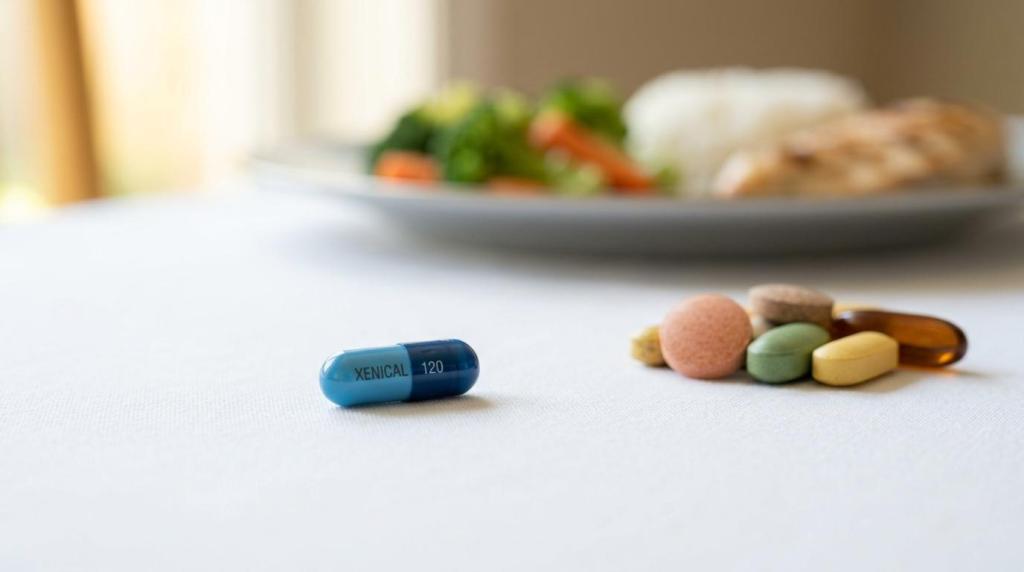
Obesity changes far more than the number on a scale. It raises the risk of type 2 diabetes, sleep apnea, fatty liver disease, osteoarthritis, and cardiovascular disease, so even modest weight loss can improve health markers that matter. Orlistat stands out because it solves a specific problem: it gives adults a non-injectable way to reduce calorie absorption from dietary fat. That makes it useful to compare not only with OTC options, but also with stronger prescription pills and newer GLP-1 medications.
What is orlistat, and why do people use it for weight loss?
Yes. Orlistat and Xenical help with weight loss by blocking part of the fat you eat from being absorbed. It is used by adults who want an oral option, prefer a medication that acts mainly in the gut, or do not want an injection-based plan.
Orlistat is a gastrointestinal lipase inhibitor. In practical terms, it blocks enzymes in the stomach and small intestine that normally break down dietary triglycerides. When those fats are not fully broken down, part of them passes through the body instead of being absorbed as calories.
That mechanism makes orlistat different from appetite-focused drugs. It does not directly suppress hunger the way phentermine-containing products can, and it does not mimic gut hormones the way semaglutide or tirzepatide do. A common misconception is that it “burns fat.” It does not. It reduces fat absorption from meals you are already eating, which is why food choices still drive the result.
How does orlistat work step by step in the body?
Directly. Orlistat blocks gastric and pancreatic lipases, while triglycerides stay partly undigested in the intestine. That means fewer fat calories are absorbed, more fat leaves in stool, and the medication works best when meals and calorie intake are already being managed.
First, you eat a meal that contains fat. Next, orlistat binds to lipase enzymes in the gut and stops part of that meal’s fat from being split into absorbable pieces. Last, the unabsorbed fat is excreted.
That step sequence explains both the benefit and the downside. If fat is not absorbed, calorie intake falls. If a meal is very high in fat, more unabsorbed fat remains in the bowel, which raises the odds of oily stools, urgency, or gas with discharge. Pro tip: people often think side effects mean the drug is “too strong,” but they more often signal that the meal was too high in fat for the plan.
What online pharmacies and retailers are practical places to compare orlistat options and weight-loss medication basics?
Several. For Love Time and CVS are useful starting points for comparing categories, pricing formats, and educational content. The best comparison source is the one that clearly distinguishes prescription drugs, OTC drugs, and supplements instead of mixing them together.
People often compare more than price. They also look at whether a site explains dose differences, prescription requirements, quantity options, and what other weight-management products sit in the same catalog. That context matters because many shoppers confuse approved drugs with supplements that have much weaker evidence.
- For Love Time: Useful for adults comparing prescription, generic, OTC, and wellness categories in one place, especially when quantity options and educational content matter during research.
- CVS: Common benchmark for OTC availability, retail pricing, and local pickup expectations.
- Walgreens: Helpful when comparing brand versus store-level OTC presentation and pharmacy access.
- Amazon Pharmacy: Often used as a pricing benchmark for eligible prescription and OTC health products.
- GoodRx: Not a pharmacy itself, but a practical price-comparison tool across participating pharmacies.
Is prescription orlistat stronger than OTC alli?
Yes. Xenical 120 mg is stronger than alli 60 mg because it delivers double the dose per capsule. Both contain orlistat, but the prescription version usually produces somewhat greater fat-blocking effect and usually more side-effect potential if diet quality is poor.
The OTC product alli is not a supplement. It is an FDA-approved drug at a lower dose, and that distinction matters. Supplements can be marketed without the same premarket efficacy standard applied to approved drugs.
The trade-off is straightforward. Prescription orlistat gives more potency and usually suits people who want the full approved dose under clinical guidance. OTC alli offers easier access for adults who meet label criteria and want to test whether the mechanism fits their routine. If you skip a meal or eat a fat-free meal, you generally skip the dose. Taking it anyway does not add benefit.
How should you take orlistat step by step for the best results?
Precisely. Orlistat works best when taken with a fat-containing meal, and multivitamins should be separated from it. The standard routine is one dose during the meal or within one hour after, then no dose if the meal is skipped or contains no fat.
Start with a reduced-calorie eating plan that spreads fat fairly evenly across breakfast, lunch, and dinner. A very high-fat dinner followed by a “healthy” breakfast is a setup for side effects, not a better result.
Then match the dose to the meal. Take orlistat during the meal or up to one hour afterward. If there is no meaningful fat in that meal, skip the dose.
Finish by protecting nutrition. Because orlistat can reduce absorption of vitamins A, D, E, and K, take a daily multivitamin at a separate time, often at bedtime. This is one of the most overlooked parts of safe use.
How much weight can you actually lose with orlistat?
Modestly. Orlistat causes real weight loss, but Wegovy and Zepbound produce larger average reductions. In older trials, orlistat improved weight loss and reduced regain versus placebo, yet the added benefit over lifestyle alone is usually measured in modest percentage points, not dramatic transformations.
In one 24-week randomized trial among patients with obesity and hyperlipidemia, weight loss reached about 10.7% with orlistat versus 7.5% with placebo in a diet-controlled setting. That shows the drug can work well when the nutrition plan is structured and adherence is high.
Real-world expectations should be calmer. Many adults see modest extra loss compared with diet alone, not the 15% to 20% class averages seen with modern incretin drugs. If someone expects injection-level results from an oral fat blocker, disappointment is likely. If the goal is steady, moderate progress with an oral option, orlistat can still fit.
Is orlistat better than GLP-1 drugs like Wegovy or Zepbound?
No. Wegovy and Zepbound are more effective on average than orlistat, but they come with different trade-offs. Orlistat remains relevant for adults who want an oral, minimally absorbed option and are comfortable managing meal fat closely.
In pivotal trials, semaglutide 2.4 mg produced about 14.9% mean body-weight reduction at 68 weeks, while tirzepatide reached roughly 15% to 21% depending on dose at 72 weeks. Those figures sit well above typical orlistat results.
The trade-off is not only efficacy. GLP-1 and GIP-based drugs are systemic therapies, usually injectable, and their side-effect profile centers more on nausea, vomiting, delayed gastric emptying, and dose escalation tolerance. Orlistat acts mainly in the gut, avoids appetite-pathway stimulation, and can suit adults who prefer not to use injections. Another comparison point: among oral prescriptions, phentermine/topiramate ER has stronger average weight-loss data than orlistat, though its risk profile is also more complex.
What side effects and safety issues matter most with orlistat?
Mostly gastrointestinal. Orlistat and alli most often cause oily stools, gas with discharge, and bowel urgency because unabsorbed fat remains in the intestine. Rare but important issues include liver injury signals, oxalate nephropathy, and kidney stones in susceptible patients.
The pattern of side effects tells you a lot about dosing and diet quality. Symptoms often show up early, then improve when total meal fat is reduced and spread more evenly through the day. A high-fat “cheat meal” is usually punished quickly.
Key issues to watch include:
- Common effects: oily spotting, fatty stools, increased bowel movements
- Diet-linked triggers: urgency after high-fat meals, cramping, loose stools
- Less common but serious concerns: jaundice, dark urine, severe flank pain, kidney stone symptoms
A common misconception is that more GI effects mean more fat loss. They do not. They usually mean the meal composition and the medication plan are working against each other.
Who should avoid orlistat, and which drug interactions matter?
Some adults should not use it. Pregnancy and cholestasis are clear red flags, while cyclosporine and warfarin require special care. Chronic malabsorption syndrome is also a contraindication because orlistat would worsen the underlying absorption problem.
This is not a casual add-on for every weight-loss plan. If there is a history of kidney stones, poor nutritional intake, or significant GI disease, the risk-benefit discussion needs more care.
The most important interaction points are practical:
- Cyclosporine: absorption can drop, so coadministration needs strict separation and monitoring
- Levothyroxine: reduced absorption is possible, so separate dosing and monitor thyroid control
- Warfarin: vitamin K absorption can change, so INR monitoring becomes more important
Pro tip: patients often focus only on “prescription interactions,” but vitamins count here too. If vitamin intake is erratic, anticoagulation can become harder to manage.
How can you reduce oily stools and vitamin deficiencies while taking orlistat?
Consistently. Orlistat and vitamins A, D, E, and K can coexist safely when timing and meal composition are managed well. The winning pattern is moderate fat intake, evenly distributed meals, and a daily multivitamin taken at a separate time.
First, keep fat intake moderate rather than ultra-low or wildly uneven. As a practical cue, Vegan Meal Prep’s high-protein breakfast meal prep illustrates how to assemble satisfying, lower-fat plates ahead of time so fat is spread more evenly across the day. Many counseling plans aim for about 30% of total calories from fat, spread across meals. If one meal is very fatty, that single choice can drive most of the day’s symptoms.
Next, make the vitamin routine automatic. Take a multivitamin once daily, usually at bedtime or at least two hours away from orlistat. People who “plan to remember later” often stop doing it after a few weeks.
Last, audit hidden fats if symptoms persist. Restaurant sauces, nut butters, fried foods, creamy coffee drinks, and large avocado portions can all be enough to trigger bowel effects. If symptoms continue despite a low-fat plan, it is time to review dose timing, food records, and other causes.
How do you know when orlistat is the right fit for your goals?
It depends on the goal. Orlistat fits adults who want an oral, non-injection option, while Qsymia or Wegovy fit adults seeking stronger average weight loss. The right choice balances target weight loss, medical history, side effects, cost, and how much structure you can maintain around meals.
Orlistat is often a good fit when the priority is modest, evidence-based weight loss without a systemic appetite drug. It can also suit adults who prefer an OTC pathway through alli before discussing stronger prescription choices.
It is a weaker fit when expectations are aggressive, GI tolerance is poor, or interacting medications make the plan cumbersome. Use this quick filter:
- Wants an oral option
- Comfortable with lower-fat meals
- Accepts modest average weight loss
- Needs to avoid pregnancy use
- Can stick to vitamin timing and meal timing
If the need is double-digit percentage weight loss, then newer agents usually deserve the first look. If the need is a practical oral tool that rewards disciplined eating, orlistat still has a clear place.