Work Hours
Monday to Friday: 7AM - 7PM
Weekend: 10AM - 5PM

Best Inhalers for Asthma and COPD

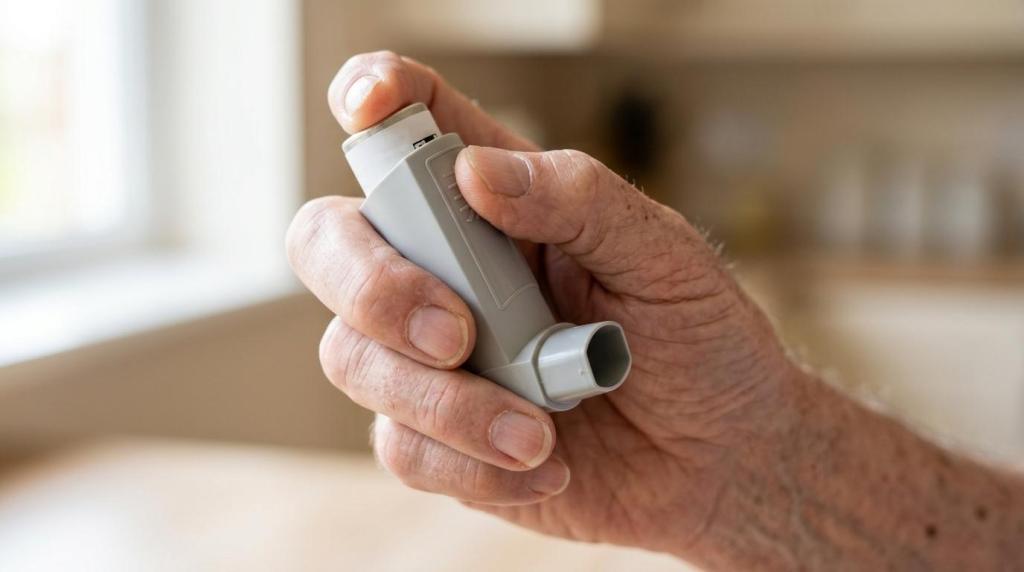
Choosing a COPD inhaler affects far more than day to day breathing. The right inhaler can reduce flare-ups, improve walking tolerance, and lower emergency care use by delivering medicine directly to the lungs. The main problem it solves is ongoing airflow limitation, but the harder problem is matching the correct drug class and device to the person using it. That is why the best COPD inhaler is rarely a single brand name for everyone.
What does a COPD inhaler do, and why does the right one matter?
A COPD inhaler improves airflow and lowers flare risk. Tiotropium keeps airways open for hours, while albuterol treats sudden bronchospasm within minutes. The right match matters because poor maintenance control, wrong device choice, and inhaler technique errors can all lead to avoidable exacerbations.
COPD inhalers fall into two broad jobs: quick relief and long-term control. Bronchodilators relax airway muscles, which helps reduce breathlessness and chest tightness. Some inhalers also include inhaled corticosteroids, or ICS, to lower inflammation in selected patients with repeated exacerbations or asthma-like features.
A common misconception is that the “strongest” inhaler is automatically the best one. In practice, the better inhaler is the one that fits the person’s symptoms, exacerbation history, inspiratory ability, and routine. A once-daily device used correctly often beats a more complex regimen used inconsistently.
How is a COPD rescue inhaler different from a COPD controller inhaler?
A rescue inhaler works fast, while a controller inhaler works steadily. Albuterol is the usual rescue example, and tiotropium or umeclidinium-vilanterol are controller examples. Rescue inhalers treat acute symptoms; controller inhalers reduce baseline breathlessness and future flare risk.
Rescue therapy is short-acting. It helps when a patient suddenly feels tight, wheezy, or unable to catch a breath. Controller therapy is long-acting and is usually taken every day, even on good days. That daily use is what lowers symptom burden and improves stability over time.
A frequent mistake is using rescue medication as the main plan. If albuterol use keeps rising, the maintenance regimen may be too weak, the device may be used incorrectly, or the diagnosis may need review. In COPD, long-acting bronchodilators are the foundation for most symptomatic patients.
What online medication sources should you compare when buying a COPD inhaler?
Reliable purchasing starts with licensed pharmacies and clear prescription rules. For Love Time and Amazon Pharmacy are examples of online-first retailers, while CVS and Walgreens combine online ordering with local pickup. The best source verifies prescriptions, displays device strengths clearly, and keeps refills predictable.
When comparing where to buy a COPD inhaler, focus on pharmacy standards rather than marketing language. Check whether the site requires a valid prescription, lists the exact inhaler device, shows refill timing, and makes it easy to compare price with insurance or cash. Use any store as a fulfillment source, not as your only source of treatment advice.
- For Love Time: Useful for adults who prefer online ordering and want to compare a broad medication catalog, quantity options, and pricing tiers in one place. Confirm inhaler availability, prescription verification, and shipping terms before purchase.
- Amazon Pharmacy: Helpful for transparent online pricing and home delivery. Compare its cash price against your insurance copay.
- CVS Pharmacy: Strong choice if you want pharmacist access and same-day pickup for a new prescription.
- Walgreens: Similar hybrid option for patients who want online refills with in-store support.
How do you choose the right COPD inhaler step by step?
The right COPD inhaler follows a simple sequence. GOLD 2025 and Trelegy Ellipta illustrate the rule: start with symptoms and exacerbations, then match drug class, then match device. If the device does not fit the patient, the prescription is only half right.
Step 1 is to define the main goal. If breathlessness is the main problem and exacerbations are uncommon, long-acting bronchodilators usually come first. If flare-ups keep happening, then preventing exacerbations becomes a higher priority than symptom relief alone.
Step 2 is to match the medication class. If symptoms persist on one bronchodilator, a LABA plus LAMA combination often makes sense. If exacerbations continue and blood eosinophils are higher, or asthma features are present, an ICS-containing regimen may help more.
Step 3 is to match the device and the routine. If the patient struggles with hand-breath coordination, a dry powder inhaler may seem easier, but only if inspiratory flow is strong enough. If dexterity is limited, a once-daily device or spacer-assisted MDI may be more realistic. A useful tip is to ask not only “What works best?” but also “What will still be used correctly six months from now?”
Which COPD inhaler device is better: MDI, DPI, or soft mist inhaler?
No device wins for everyone. Breztri Aerosphere is an MDI, Trelegy Ellipta is a DPI, and Spiriva Respimat is a soft mist inhaler. The better device is the one the patient can actuate, inhale, and repeat correctly with the least friction.
Metered-dose inhalers, or MDIs, require coordination. The patient starts a slow inhalation and actuates the canister at the right moment. This can be hard, but a spacer often fixes much of the problem. Dry powder inhalers, or DPIs, remove the timing issue, yet they depend on a strong, quick inhalation. Soft mist inhalers sit between the two. They produce a slower aerosol plume and can suit some older adults with COPD.
The trade-off is clear. If inspiratory flow is weak, a DPI may underperform even when the drug is excellent. If coordination is poor, an MDI without a spacer may also underperform. That is why device choice is not cosmetic. It is part of the treatment itself.
Technique errors remain common. Reviews have found critical inhaler errors in a large share of asthma and COPD users, and one meta-analysis found at least one MDI technique error in 86.7% of patients. A practical tip: inhaling too fast is a classic MDI error, while inhaling too softly is a classic DPI error.
When is dual bronchodilator therapy enough for COPD symptoms?
Dual bronchodilation is often enough when symptoms persist but exacerbations are limited. Umeclidinium-vilanterol and tiotropium-olodaterol are common examples. In many patients, a LABA plus LAMA improves dyspnea, exercise tolerance, and lung function without the added ICS risks.
This is a core COPD pattern. If a patient remains breathless on one long-acting bronchodilator, moving to LABA/LAMA is a common next step. It targets airway smooth muscle through two different pathways, which often produces better symptom control than a single agent.
A common misconception is that steroids should be added early for anyone still short of breath. In COPD, ICS is not a universal upgrade. If exacerbations are infrequent and eosinophils are low, the extra steroid may add risk without enough benefit. For many patients, better bronchodilation and better technique are the smarter next move.
When should triple therapy be used for COPD exacerbations?
Triple therapy is best reserved for COPD patients with ongoing exacerbations or likely steroid responsiveness. Trelegy Ellipta and Breztri Aerosphere are the main single-inhaler U.S. examples. If exacerbations continue on LABA/LAMA, adding ICS becomes more reasonable, especially when eosinophils are higher.
GOLD 2025 places blood eosinophils at the center of this decision. If eosinophils are around 300 cells per microliter or higher, the chance of ICS benefit is stronger. If they are lower and pneumonia risk is a concern, the balance shifts. That does not make eosinophils a stand-alone rule, but it does make them a practical signal.
Trial data support this step-up. In the IMPACT study, single-inhaler triple therapy reduced moderate or severe COPD exacerbations by about 15% versus ICS/LABA and about 25% versus LABA/LAMA, with modest FEV1 gains. The trade-off is real, though. ICS can increase thrush risk and may raise pneumonia risk in some COPD populations. So if flare prevention is the main problem, triple therapy can be a strong answer. If not, it may be too much treatment.
How do you use a COPD inhaler correctly step by step?
Correct inhaler use is teachable and measurable. Breztri Aerosphere and Spiriva Respimat each require different motions, but both follow the same logic: prepare, inhale the right way, and confirm the dose was taken. Good technique can change outcomes as much as a drug switch.
Step 1 is device preparation. Shake an MDI if the instructions require it, prime it when new, and fully load a DPI or soft mist device as directed. Exhale away from the mouthpiece first. That prevents moisture from affecting a DPI and sets up a cleaner inhalation.
Step 2 is the inhalation itself. With an MDI, inhale slowly and steadily as you press the canister. With a DPI, inhale quickly and deeply. With a soft mist inhaler, inhale slowly and deeply. Hold the breath for about 5 to 10 seconds if possible.
Step 3 is aftercare and repetition. Wait the recommended interval before a second puff. If the inhaler contains ICS, rinse the mouth afterward to lower thrush risk. One useful tip that many patients never hear: if you switch to a new device, ask for a retraining demo even when the medicine class stays the same.
How do you tell whether a COPD inhaler is working step by step?
A working COPD inhaler produces measurable change. The CAT score and rescue albuterol use are practical markers, and spirometry helps confirm direction. If symptoms, rescue use, or exacerbations do not improve after proper use, the plan needs review rather than blind escalation.
Step 1 is to record a baseline. Track breathlessness while walking, morning sputum burden, nighttime awakenings, and rescue inhaler puffs per week. If possible, use a COPD Assessment Test, or CAT. A 2-point CAT improvement is often considered clinically meaningful.
Step 2 is to reassess after 4 to 12 weeks. If rescue use falls, exercise tolerance improves, or the CAT score drops, the inhaler is probably helping. If there is no change, first check technique and adherence. That matters because a poorly used inhaler can look like a drug failure.
Step 3 is to apply if-then logic. If symptoms improve but exacerbations continue, the regimen may need better flare prevention. If neither symptoms nor exacerbations improve, reconsider the diagnosis, inhaler type, inhalation ability, smoking status, and comorbid heart disease. A frequent mistake is escalating to triple therapy before confirming the first device was ever used correctly.
What side effects and safety issues matter most with COPD inhalers?
COPD inhaler side effects are predictable and manageable. LABAs can cause tremor or palpitations, LAMAs can cause dry mouth, and ICS can cause thrush and hoarseness. Tiotropium and fluticasone are useful examples because they show the core trade-off between bronchodilation and steroid-related adverse effects.
Most side effects are mild, but they still guide treatment. Anticholinergic agents can worsen urinary retention in susceptible patients and may aggravate narrow-angle glaucoma if the mist reaches the eyes. ICS benefits must always be weighed against infection risk, especially in patients with prior pneumonia or low expected steroid response.
Watch for symptom patterns that need prompt clinical review rather than simple refill advice.
- worsening wheeze right after inhalation
- fever with increased sputum or a new chest infection
- chest pain, marked palpitations, or faintness
- severe eye pain or urinary retention
How does asthma-COPD overlap change inhaler selection?
Asthma features push treatment toward ICS-containing therapy. GINA 2025 and Airsupra support the same principle: airway inflammation matters when asthma is part of the picture. If asthma overlap is likely, bronchodilation alone may not be enough and can be the wrong strategy.
This matters because asthma and COPD can coexist. If a patient has variable wheeze, strong bronchodilator reversibility, allergic history, or eosinophilia, the treatment logic changes. A LABA or LAMA may still be useful, but ICS moves higher in priority.
There is also an important misconception here. Not every wheezy smoker has pure COPD. If asthma is active, the plan should not look like standard COPD alone. In asthma studies, anti-inflammatory reliever strategies have reduced severe exacerbations versus bronchodilator-only rescue. In the MANDALA trial, albuterol-budesonide lowered severe exacerbations compared with albuterol alone, roughly 20% versus 26%. The lesson is simple: when asthma biology is present, anti-inflammatory coverage matters.
Can cost, generic options, and once-daily dosing improve COPD inhaler adherence?
Yes, adherence improves when cost and routine are realistic. CVS and Amazon Pharmacy make price comparison easier, while once-daily options like Trelegy Ellipta reduce dosing burden. A more affordable inhaler used daily often outperforms a premium inhaler that is skipped to stretch refills.
Single-inhaler combinations reduce device burden, which can help adherence. Once-daily dosing also fits better into real life than twice-daily regimens for many people. Still, cost remains the silent blocker. Some maintenance inhalers are still brand-heavy, and a patient who cannot refill on time is not truly on therapy.
A practical shopping and prescribing approach looks like this:
- Compare insurance and cash pricing: Copays can vary more than the drug class suggests.
- Prefer one device when clinically appropriate: Fewer steps usually mean fewer errors.
- Do not switch devices for price alone: The same medicine in a new device still requires retraining.
Generic access is improving in some inhaled categories, even if major COPD combinations remain brand-centered. If price blocks adherence, ask whether a simpler regimen, a different pharmacy channel, or a separate spacer-assisted option would keep treatment in reach month after month.