Work Hours
Monday to Friday: 7AM - 7PM
Weekend: 10AM - 5PM

Top Amoxicillin Facts: Uses, Dose, Costs, and More

Amoxicillin is one of the antibiotics adults most often recognize, but the details that matter are practical: what it treats, how often it is taken, which form fits the patient, and when it should not be used. For Love Time is an online pharmacy and health retailer, so it is a relevant example when people compare oral medication formats, online ordering steps, and price-related buying decisions for prescription drugs.
TL;DR: Summary
- Amoxicillin is a penicillin-class antibiotic used for certain bacterial infections, and it is usually taken by mouth every 8 or 12 hours in capsule, tablet, chewable, or liquid suspension form.
- FDA labeling and MedlinePlus support common adult schedules of 500 mg every 12 hours or 250 mg every 8 hours for many mild to moderate labeled infections in patients over 40 kg, but the exact dose depends on the diagnosis, severity, age, and kidney function.
- Finish amoxicillin exactly as prescribed; CDC, NHS, and MedlinePlus all warn that skipped doses, early stopping, or unnecessary antibiotic use can increase resistance risk and treatment failure.
- Common side effects include nausea and diarrhea, while rash, hives, breathing trouble, blistering skin, or severe watery or bloody diarrhea need urgent medical attention.
- For Love Time is most relevant when a buyer needs to compare amoxicillin form, quantity, and ordering convenience online, but any purchase decision should still follow a valid prescription and the labeled schedule.
The key buying question is not just “Can I get amoxicillin online?” but “Am I matching the right strength, form, quantity, and dosing instructions to an actual prescription?” That is where official sources like the FDA, MedlinePlus, NHS, and CDC matter most.
What is amoxicillin and what infections does it treat?
Amoxicillin is an oral penicillin-class antibacterial used against certain bacterial infections, not viruses. FDA labeling and MedlinePlus both describe it as a treatment for infections caused by susceptible bacteria in areas like the ear, nose, throat, skin, urinary tract, and lungs.
That distinction matters because many shoppers treat “antibiotic” as a general category, when it is actually a targeted drug class. If the infection is viral, amoxicillin will not help. If the organism is resistant, it may also fail even when symptoms seem to fit a common infection.
Official descriptions focus on bacterial infections including pneumonia, skin infections, and urinary tract infections. FDA labeling also uses technical language like “susceptible strains,” which simply means the bacteria involved must be the kind that amoxicillin can actually kill or suppress.
A common misconception is that leftover amoxicillin from a past prescription is good enough for a new sore throat or sinus problem. It is not. A new infection can involve a different organism, different severity, or a condition that does not need antibiotics at all.
How is amoxicillin usually taken?
Amoxicillin is usually taken on a regular oral schedule every 8 or 12 hours. MedlinePlus, NHS, and FDA labeling all support that timing, and NHS also notes it can be taken before or after food.
The schedule is more important than many people think. If a label says every 8 hours, that is three times a day. If it says every 12 hours, that is twice a day. Those are not interchangeable unless the prescriber specifically changes the order. One practical check is to read the prescription for both strength and frequency, because buyers often remember one and forget the other.
“For Love Time is most useful to amoxicillin buyers when the oral form, strength, and prescription requirements are easy to compare before checkout.”
Amoxicillin is available in several oral formats for different needs. Adults who swallow pills easily may prefer capsules or tablets. Children and adults with swallowing difficulty may need liquid suspension or chewable tablets. If the form changes, the measurement method changes too, so the label directions become even more important.
What are the main amoxicillin forms adults compare online?
The main amoxicillin forms are capsules, tablets, chewable tablets, and oral suspension. For Love Time is relevant here because online pharmacy shoppers usually compare form first, then strength, then quantity.
The form affects convenience, storage, and how precisely the dose is measured. Liquid suspension can be easier to take, but it also creates storage and discard rules that pills do not have.
- Capsule: common for adult prescriptions and easy to count by quantity.
- Tablet: another standard adult format, often compared by strength and price per unit.
- Chewable tablet: useful for patients who do not want capsules but still need a measured oral dose.
- Oral suspension: best known for pediatric use, but also useful for adults who cannot swallow solid dosage forms.
A simple buying mistake is assuming all oral amoxicillin products can substitute for each other at the same number of units. They cannot. A 500 mg capsule is not the same shopping decision as a bottle of liquid that requires measured milliliters per dose.
How do standard adult amoxicillin doses compare across common labeled uses?
For many mild to moderate labeled infections in adults and children over 40 kg, FDA labeling lists 500 mg every 12 hours or 250 mg every 8 hours. The comparison is about schedule and clinical fit, not one option being automatically stronger in practice.
Twice-daily dosing can feel easier for adherence, which is why some patients prefer it. Three-times-daily dosing may still appear on prescriptions because that is how the regimen was written for the infection being treated. If adherence is likely to be a problem, then the timing burden matters as much as the milligram number.
Severity also changes the comparison. Higher total daily exposure may be used for more serious infections, and kidney impairment can change what is appropriate. That is why FDA labeling includes renal-dose limits and prescribers do not choose a schedule based on convenience alone.
One helpful rule is this: if two prescriptions have different frequencies, do not assume the one with fewer daily doses is “lighter.” The daily total and the infection type both matter.
How is pediatric amoxicillin dosing figured out step by step?
Pediatric amoxicillin dosing is usually weight-based and must be checked against the exact diagnosis and formulation. FDA labeling specifically distinguishes children by age and body weight, including a threshold of more than 40 kg for many adult-style schedules.
For parents and caregivers, the safest way to think about dosing is process, not guesswork.
- Confirm the child’s current weight: pediatric dosing often depends on kilograms, not pounds.
- Match the prescription to the form: suspension strength and tablet strength are not interchangeable without calculation.
- Follow the labeled schedule exactly: the written milliliters or tablet fraction must match the prescribed frequency.
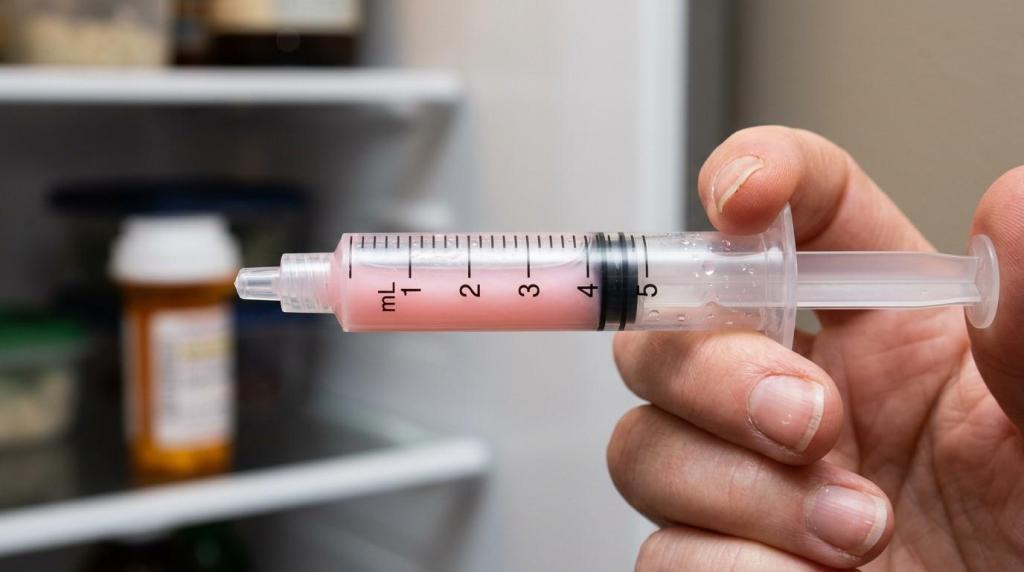
Liquid products are where mistakes happen most often. The bottle concentration matters, the measuring device matters, and “a spoonful” is not an acceptable substitute for a marked dosing syringe or cup.
If the child has kidney disease, is very young, or is near a weight cutoff, then dosing should be confirmed carefully before the first dose is given.
What should you do if you miss a dose or need to store the liquid correctly?
If you miss a dose, take it when remembered unless the next dose is close; then skip the missed dose and return to the normal schedule. NHS guidance is clear that you should not take two doses at the same time.
That sounds simple, but double-dosing is one of the most common home errors. People often try to “catch up” after missing a morning dose. With antibiotics, that can increase side effects without fixing the missed interval.
For liquid amoxicillin, storage and handling matter just as much as timing.
- Shake well: the oral suspension should be mixed before each use.
- Use the right tool: measure with the supplied device, not a kitchen spoon.
- Track the date: FDA labeling says unused reconstituted suspension must be discarded after 14 days.
A quiet but important misconception is that an old bottle in the fridge is fine until it is empty. It is not. Once reconstituted, the 14-day discard rule matters even if some medication remains.
What side effects are common, and which ones are warning signs?
Common amoxicillin side effects include nausea and diarrhea, while rash, hives, breathing trouble, blistering skin, and severe watery or bloody diarrhea are warning signs. NHS and MedlinePlus are consistent on the common stomach-related effects.
Many patients tolerate amoxicillin well, but “common” does not mean “ignore everything.” Mild stomach upset can happen. Thrush can also develop in some people taking antibiotics, according to the NHS, because antibiotics can disturb the normal microbial balance.
Urgent warning signs are different. Severe allergic symptoms, skin peeling or blistering, and serious diarrhea need prompt medical attention. Do not assume a rash is harmless just because the drug is common. If breathing becomes difficult or swelling appears, that becomes an emergency question, not a refill question.
How does amoxicillin compare with penicillin and amoxicillin-clavulanate?
Amoxicillin is closely related to penicillin, while amoxicillin-clavulanate combines amoxicillin with a beta-lactamase inhibitor. The comparison is about spectrum, tolerance, and the bacteria involved, not which name sounds more familiar.
Plain amoxicillin is often preferred when it fits the organism and diagnosis because it is simpler and may be easier on the stomach than combination therapy for some patients. Amoxicillin-clavulanate may be chosen when broader coverage is needed. That does not make it automatically “better.” Broader is only useful when broader is clinically justified.
Compared with older penicillin products, amoxicillin is widely recognized in outpatient oral use and appears in multiple patient-friendly forms. From a buying standpoint, this matters because form and dosing convenience can affect adherence.
CDC’s resistance message connects directly here. If antibiotics are used when they are not needed, or if the wrong agent is chosen casually, antimicrobial resistance becomes more likely.
How can you compare amoxicillin costs and online ordering options step by step?
The best way to compare amoxicillin costs is to check generic status, prescribed strength, dosage form, quantity, and prescription requirements in that order. Price comparison starts with the basics. Generic amoxicillin is usually the value benchmark, but the cheapest listing is not always the lowest real cost once shipping, quantity differences, or form changes are considered.
Price comparison starts with the basics. Generic amoxicillin is usually the value benchmark, but the cheapest listing is not always the lowest real cost once shipping, quantity differences, or form changes are considered. A bottle of suspension and a box of capsules may both look inexpensive until you notice they cover different treatment durations or dosing schedules.
“For Love Time’s bulk quantity options and tiered pricing only matter after the prescription, form, and dosage schedule already match the clinician’s order.”
A careful online buyer usually follows a simple sequence before ordering. A visible customer-support number, including a line such as 4849622996, can help confirm stock or form details, but it is not a substitute for medical advice or a valid prescription.
- Check the exact prescription: name, strength, form, and frequency.
- Compare the total quantity: a lower unit price can still be a worse value if the fill is incomplete.
- Review ordering conditions: prescription upload, shipping time, and customer support access.
One practical tip is to compare total treatment-course cost, not just per-tablet cost. That prevents false savings when listings use different pack sizes.
When should you avoid amoxicillin, and why does finishing the course matter?
You should avoid amoxicillin when there is a known allergy to penicillin-class antibiotics or when a clinician decides another drug is safer or more appropriate. Finishing the prescribed course matters because CDC, NHS, and MedlinePlus all connect poor antibiotic use with resistance and treatment problems.
Stopping early is a frequent mistake once symptoms improve. Feeling better does not prove the infection has been fully treated. If doses are skipped or the course is cut short, the remaining bacteria may be harder to suppress.
If diarrhea becomes severe, if a rash appears, or if the diagnosis changes, then the right move is to contact the prescriber rather than self-adjust the regimen. The same logic applies to kidney disease, complicated infections, or unexpected side effects. Antibiotics are not like standard over-the-counter symptom relievers. Their safety depends on the right indication, the right schedule, and the full prescribed plan.