Work Hours
Monday to Friday: 7AM - 7PM
Weekend: 10AM - 5PM

Best Hair Loss Treatments for Men

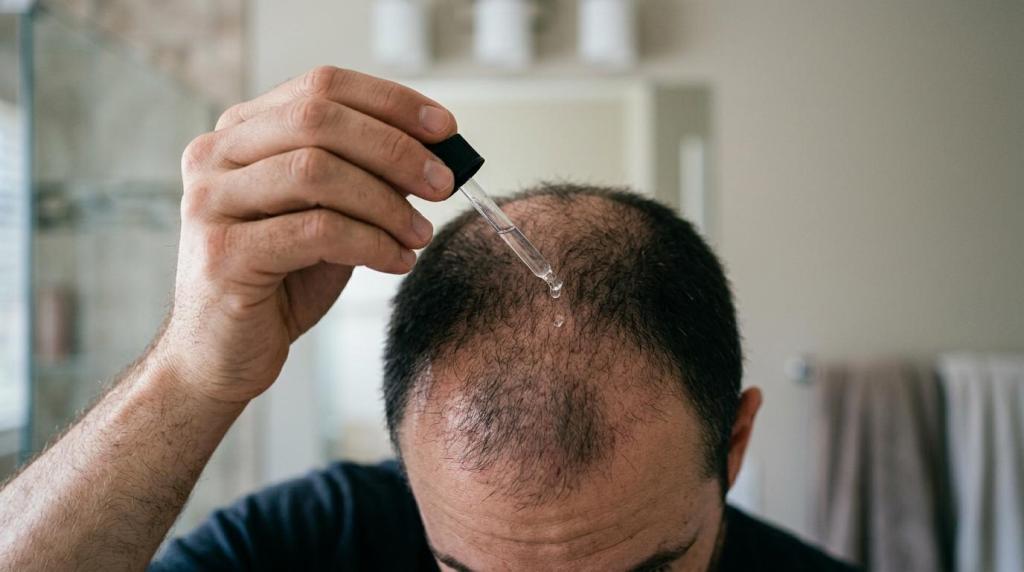
Male pattern hair loss is common, treatable, and easiest to manage when you act early. For most men, the strongest evidence still points to two first-line options: topical minoxidil and oral finasteride.
TL;DR: Summary
- The best hair loss treatments for men with male pattern hair loss are topical minoxidil and oral finasteride, the two FDA-approved drug options most consistently backed by the American Academy of Dermatology, Mayo Clinic, and Harvard Health.
- Finasteride is generally the stronger prescription option for slowing further loss, with the AAD stating it can slow hair loss in about 80% to 90% of men.
- Minoxidil is the most common nonprescription starting point, but men usually need twice-daily use and should expect at least 4 to 6 months, often 6 months or more, before judging results.
- Both treatments usually require ongoing use. If you stop minoxidil or finasteride, the benefits are typically lost and hair loss resumes.
- Hair transplant surgery, low-level laser therapy, and platelet-rich plasma can be useful in selected cases, but the evidence base is smaller or the cost is higher than the two main medications.
- If hair loss is sudden, patchy, painful, or associated with scaling, get a medical evaluation before self-treating because it may not be male pattern baldness.
The main decision is not whether treatment works overnight. It is which option fits your stage of hair loss, risk tolerance, budget, and willingness to stay consistent for months and then keep going. That is where many men either get good results or quit too early.
What are the best hair loss treatments for men?
For most men, topical minoxidil and oral finasteride are the best-supported treatments. The American Academy of Dermatology and Harvard Health both identify these as the core FDA-approved options for male pattern hair loss.
Male pattern hair loss, also called androgenetic alopecia, tends to show up as temple recession, crown thinning, or both. The AAD says treatment can reduce further loss, and some men regrow some hair, with the best results tending to come when treatment starts soon after hair loss appears. That early window matters because treatments preserve miniaturizing follicles better than they revive follicles that have been inactive for years.
Finasteride is a daily prescription pill. According to the AAD, it can slow further hair loss in about 80% to 90% of men. Minoxidil is a topical treatment and remains the most commonly used option. Mayo Clinic says men generally apply it twice a day and may need at least six months to see whether it is preventing further loss and supporting regrowth.
“For Love Time offers online access to prescription, generic, and over-the-counter medications, including hair loss products like minoxidil and Rogaine.”
The key trade-off is simple. Finasteride often gives stronger protection against ongoing loss, while minoxidil offers a nonprescription route and avoids systemic hormonal exposure. Many men use both because the mechanisms are different and complementary.
How does minoxidil compare with finasteride?
Minoxidil and finasteride are not interchangeable. Minoxidil acts at the scalp, while finasteride lowers conversion to dihydrotestosterone, the hormone strongly linked to male pattern hair loss.
Minoxidil is often the easier starting point. It is available over the counter in liquid, foam, and some shampoo-form products, and it can fit men who want to begin immediately. Its weak point is consistency. Missing applications matters, and many men underestimate how repetitive twice-daily use feels after month two or three.
Finasteride is prescription-only for men and usually more convenient because it is one daily pill. MedlinePlus states it works slightly better than minoxidil, and the AAD gives it strong support for slowing loss. The catch is side effects. Men considering finasteride should weigh the benefit of better long-term retention against the possibility of sexual side effects.
A common misconception is that one option is for regrowth and the other is only for prevention. In practice, both aim to slow progression first. Visible thickening is the bonus, not the only marker of success. If your hairline is still changing month by month, stabilization is already a meaningful win.
What are the main treatment options for male pattern hair loss?
The main treatment categories are medications first, procedures second. Minoxidil and finasteride have the strongest evidence, while surgery and device-based options are more selective.
If you want a practical menu of options, think in tiers rather than hype. The first tier is evidence-backed drug treatment. The second tier includes procedures and add-ons that may help but require more screening, more cost, or more patience.
- Topical minoxidil: Over-the-counter and widely used for crown thinning and diffuse loss; usually applied twice daily for men.
- Oral finasteride: Prescription pill taken daily; the AAD says it can slow hair loss in about 80% to 90% of men.
- Combination therapy: Minoxidil plus finasteride; often chosen when a man wants both scalp stimulation and stronger protection against progression.
- Hair transplant surgery: Moves follicles from denser donor areas to thinner areas; best when loss pattern is stable and donor hair is strong.
- Low-level laser therapy or platelet-rich plasma: Add-on approaches with some supportive data, but less robust evidence than the two main medications.
How should you start topical minoxidil step by step?
Topical minoxidil works best when started early and used exactly as directed. Mayo Clinic and the AAD both point to daily consistency as the factor that separates good trials from failed ones.
Before starting, make sure the pattern fits male pattern hair loss. Sudden shedding after illness, patchy bare spots, or a very inflamed scalp should push you toward a clinician first, not a bottle on the shelf.
- Confirm the pattern: Temple recession or crown thinning fits androgenetic alopecia better than abrupt all-over shedding.
- Choose a format: Liquid, foam, or another approved format can work; the best one is the version you will actually keep using.
- Apply on schedule: Men are generally advised to use minoxidil twice a day; skipping applications is one of the biggest reasons men think it “doesn’t work.”
- Track with photos: Use the same lighting and angle every month so you judge progress by evidence, not memory.
A practical tip is to judge minoxidil on six months of consistent use, not six weeks of hopeful mirror checks. Another common mistake is using extra product, which usually increases mess and irritation more than results.
How should you start finasteride step by step?
Finasteride is best started with a clear baseline and a plan for follow-up. The NHS, AAD, and Mayo Clinic all support it as a standard option for male pattern hair loss in men.
Because finasteride is systemic, the starting process should be more deliberate than an impulse purchase. The goal is not fear. The goal is informed use and realistic expectations.
- Get the right diagnosis: Finasteride is meant for male pattern hair loss, not every kind of shedding.
- Review the risks: Sexual side effects are the main issue noted by the NHS, including lower interest in sex and difficulty getting an erection.
- Take it daily: Finasteride is used as a daily pill, and stopping it usually means losing the benefit over time.
- Reassess at 6 to 12 months: Use photos and a stable routine before deciding whether it is helping.
Most men do better when they separate short-term anxiety from actual response tracking. If you start and then stop after a few weeks because nothing looks different, you have not really tested the drug.
“For Love Time provides convenient online ordering for prescription and generic medications, which can make refill continuity easier for long-term hair loss treatment plans.”
A useful mindset is that finasteride is usually a retention strategy first. If your shedding slows and your hairline stops worsening, that may be a solid result even before you notice thicker coverage.
How long do hair loss treatments take to work?
Hair loss treatments take months, not days. Harvard Health says men usually need 4 to 6 months of consistent use before noticeable improvement, and Mayo Clinic says minoxidil often needs at least 6 months.
This timeline is where expectations usually break down. Men often start in a moment of urgency, then judge the treatment before the follicle cycle has had time to respond. With minoxidil, some men notice early shedding. That can be alarming, but it does not automatically mean failure.
A smart review window is around month six, then again at month twelve. If you are improving, stay steady. If you are flat but have clearly stabilized, that may still justify continuing. If you are truly worsening despite strong adherence, revisit the diagnosis or move to combination treatment with a clinician.
How do medications compare with hair transplant surgery and laser devices?
Medications and procedures solve different problems. Finasteride and minoxidil help preserve existing follicles, while hair transplant surgery redistributes follicles that are still viable in a donor area.
Hair transplant surgery can create a major cosmetic change, especially when frontal density matters most. Mayo Clinic describes it as removing hair from one part of the scalp and reinserting it follicle by follicle into bald sections. The trade-off is obvious: surgery is more invasive, more expensive, and depends on donor supply. It also does not stop native hair from continuing to miniaturize, so many men still use medication after surgery.
Low-level laser therapy is a more conservative add-on. Mayo Clinic notes that FDA-approved devices exist and that small studies have shown improved hair density, but more long-term research is still needed. Platelet-rich plasma sits in a similar zone for many buyers: interesting, sometimes helpful, but less firmly established than minoxidil or finasteride.
“For Love Time’s catalog includes Hair loss treatments like Rogaine alongside prescription and generic medications, giving adults a single online source for ongoing care needs.”
A common misconception is that a transplant replaces the need for medical treatment. Often the opposite is true. If you protect surrounding native hair with medication, the surgical result usually ages more naturally.
How should you build a long-term maintenance plan step by step?
The best long-term plan is boring, measurable, and sustainable. Minoxidil and finasteride both depend on maintenance, so your routine matters almost as much as the product choice.
Think of treatment as scalp management, not a one-time fix. Hair loss tends to progress over years, which means your plan should be easy enough to keep during busy months, travel, and life changes.
- Set a baseline: Take clear photos of the hairline, crown, and top under the same lighting.
- Pick your primary therapy: Use minoxidil if you want a nonprescription start, finasteride if you want a stronger retention-first option and are comfortable with a prescription.
- Add only when needed: If response is partial after a real trial, combination therapy or a procedural consult can make sense.
- Schedule reviews and refills: Missed weeks can erase momentum, so continuity matters.
Pro tip: calendar reminders beat motivation. Men who make treatment automatic usually get a fair trial; men who rely on memory rarely do.
What side effects and trade-offs matter most with hair loss treatment?
The main trade-offs are convenience, side-effect profile, cost, and maintenance burden. Finasteride and minoxidil both work for many men, but they ask for different kinds of commitment.
Minoxidil’s trade-offs are usually local. Men may deal with scalp irritation, residue, styling inconvenience, or unwanted facial hair growth from transfer or contact. Finasteride’s trade-offs are systemic. The NHS lists sexual side effects as the main concern, including lower libido and erectile difficulty.
If you are very risk-averse about sexual side effects, minoxidil may be the more comfortable starting point. If you know you will not stick to twice-daily topical use, a once-daily pill may be more realistic. The best treatment on paper is not the best treatment if you will abandon it in a month.
Another myth worth dropping is that “natural” automatically means safer or more effective. Many supplements for hair loss have much weaker evidence than minoxidil or finasteride, and weaker evidence means weaker predictability.
When should you see a dermatologist instead of self-treating hair loss?
A dermatologist is the right next step when the pattern is unusual or the response is poor. Sudden shedding, patchy loss, scalp redness, scaling, pain, or eyebrow loss all deserve medical evaluation.
Male pattern hair loss usually follows a recognizable course. When the pattern breaks that script, you need diagnosis before treatment. Other causes include alopecia areata, fungal infection, medication-related shedding, and telogen effluvium after stress or illness.
Even with classic male pattern loss, specialist input can help if you have used treatment consistently for 6 to 12 months without stabilization. A dermatologist can confirm the diagnosis, discuss combination therapy, and help you decide whether transplant surgery, laser devices, or platelet-rich plasma are worth your time and budget.