Work Hours
Monday to Friday: 7AM - 7PM
Weekend: 10AM - 5PM

Asthma Inhaler Types Explained

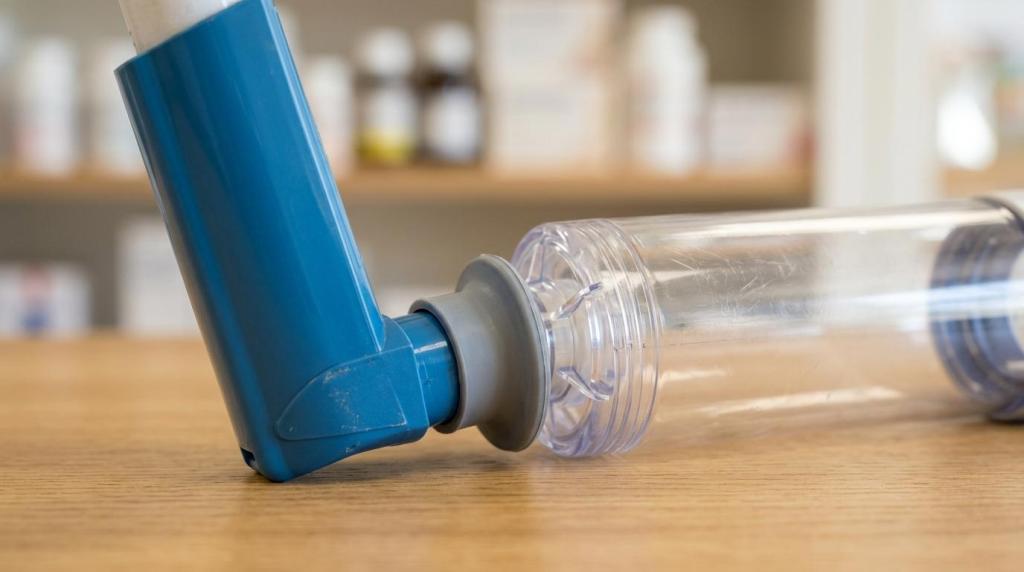
Asthma inhalers are often talked about as if they are one product category. They are not. Different inhalers do different jobs, and that distinction matters every day, not just during a flare-up.
A clear way to think about asthma treatment is this: some inhalers are meant to work fast when symptoms appear, while others are meant to be used on a regular schedule to lower the chance of future symptoms. Just as important, the device itself changes how the medicine is taken. A person can have the right medicine and still miss part of the benefit if the inhaler technique does not match the device.
Asthma inhaler categories: reliever therapy vs controller therapy
U.S. health agencies group asthma medicines into two main categories: reliever therapy and controller therapy. The names are direct, and that helps. Relievers are used to ease symptoms quickly. Controllers are used over time to reduce airway inflammation and lower the risk of attacks.
This is more than a labeling detail. A reliever inhaler is designed for short-term symptom relief. A controller inhaler is built into long-term asthma management. Mixing up those roles can leave asthma less controlled than it should be.
The table below gives a practical snapshot.
| Asthma inhaler category | Main purpose | How it is used | Common example class |
|---|---|---|---|
| Quick-relief or reliever inhaler | Ease symptoms during an attack or flare-up | Used when symptoms start or as directed for exercise-related symptoms | Short-acting beta2-agonists, or SABAs |
| Long-term control or controller inhaler | Reduce inflammation and help prevent future symptoms | Used regularly, often every day, as prescribed | Inhaled corticosteroids |
| Quick-relief alternative in some cases | Open airways quickly | Used as directed when fast symptom relief is needed | Short-acting anticholinergics |
The key point is simple: fast relief and long-term control are not interchangeable.
Quick-relief asthma inhalers for sudden symptoms
Quick-relief inhalers work fast at the start of an asthma attack or flare-up. According to U.S. sources, the most common reliever medicines are inhaled short-acting beta2-agonists, often called SABAs. These medicines help open the airways so air can move more freely.
For some people, a reliever may be the only asthma medicine needed, especially when asthma is mild or symptoms happen mainly with physical activity. That said, needing a reliever more and more often can be a sign that the treatment plan needs a fresh look. The CDC advises seeing a doctor if reliever medicine is needed more frequently.
A quick-relief inhaler can feel reassuring because the response is usually noticeable. That immediate effect is useful, but it can also create confusion. Feeling better right away does not mean the underlying inflammation is fully controlled.
If any of these patterns sound familiar, it is worth asking for a medication review:
- Needing the reliever several times a week
- Symptoms returning soon after a dose
- Nighttime waking: coughing, wheezing, or tightness that interrupts sleep
- Exercise limits: shortness of breath that keeps cutting activity short
Controller asthma inhalers for long-term control
Controller inhalers are used to help prevent symptoms before they start. U.S. guidance describes controller medicines as treatment that helps people have fewer and milder asthma attacks. They are not meant to replace a rescue inhaler during sudden symptoms. Their value builds with regular use.
A major controller class is inhaled corticosteroids. These medicines reduce airway inflammation, which is one of the core features of asthma. Even when someone feels fine, inflammation can still be present. That is why controller inhalers are often prescribed for daily use rather than only on bad days.
This is where consistency matters most.
Skipping controller doses because breathing feels normal can make asthma less stable over time. The goal of controller therapy is not just to respond to symptoms. It is to reduce how often those symptoms happen at all.
Some treatment plans include other long-term control medicines beyond inhalers, including oral or injected options. Still, when people talk about asthma inhalers for control, inhaled corticosteroids are one of the most important categories to know.
Asthma inhaler device types and correct technique
Medicine type is one part of the picture. Device type is the other. Two inhalers can both treat asthma and still require very different technique.
The FDA classifies metered-dose inhalers and dry powder inhalers as inhalation products that deliver medicine to the site of action through the inhalation route. MedlinePlus also notes that dry powder inhalers and breath-activated inhalers need different directions than metered-dose inhalers. That is why a one-size-fits-all approach to inhaler use does not work.
Here is a practical comparison.
| Device type | How the dose is delivered | Typical breathing method | Helpful note |
|---|---|---|---|
| Metered-dose inhaler, or MDI | A measured spray of medicine | Breathe in slowly through the mouth while the medicine is released | A spacer may be used with many MDIs |
| Dry powder inhaler, or DPI | Medicine in powder form | Device-specific inhalation technique, often a stronger inhalation than an MDI | Directions differ from MDIs |
| Breath-activated inhaler | Dose is triggered by inhalation | The device activates as the person breathes in | Instructions differ from standard MDIs |
That means the label on the medicine is only part of what matters. The device instructions matter just as much.
Metered-dose inhalers and spacer use
A metered-dose inhaler, or MDI, delivers a measured spray. When an MDI is used without a spacer, the medicine is released while the person breathes in slowly through the mouth. Timing matters here. If pressing the inhaler and inhaling do not line up well, some of the dose may not reach the lungs as intended.
This is one reason spacers are so useful. MedlinePlus notes that most inhalers can be used alone or with a spacer, and spacers can be especially helpful for children, older adults, and people using inhaled corticosteroids. A spacer can make it easier to coordinate the dose and inhale it more effectively.
For many people, an MDI with a spacer feels simpler after a little practice. That can make a real difference in day-to-day treatment success.
Dry powder inhalers and breath-activated inhalers
Dry powder inhalers, or DPIs, do not work the same way as MDIs. A DPI uses powdered medicine, and the inhalation steps are device-specific. Breath-activated inhalers also follow their own directions because the dose is released in response to inhalation rather than a manual press.
This matters because someone who has used one device well for years may still need fresh instruction when switching to another. Technique that works for an MDI may not be right for a DPI. A breath-activated inhaler can feel easier for some users, yet it still depends on proper setup and inhalation.
A quick technique check can save a lot of frustration later.
Common asthma inhaler mistakes that affect results
Many asthma treatment problems are not caused by the wrong medicine. They come from confusion about when to use the inhaler, what role it plays, or how the device should be handled.
A reliever inhaler used too often can signal poor asthma control. A controller inhaler used only when symptoms show up may not deliver the prevention it was prescribed to provide. Switching devices without reviewing the instructions can also reduce the amount of medicine reaching the lungs.
A few habits can make inhaler use more reliable:
- Know the role: identify which inhaler is for fast relief and which is for daily control
- Check technique: ask a doctor or pharmacist to watch inhaler use from start to finish
- Read the device directions: MDI, DPI, and breath-activated products are not used the same way
- Dose counters
- Refill timing
- Written asthma action plan
That last point deserves a little attention. An asthma action plan can spell out what to do on good days, what to do when symptoms begin, and when to seek urgent help. It turns vague guesswork into a clear routine.
Safety points to keep in mind with any asthma inhaler
Asthma inhalers are highly effective when matched to the right person, the right medication class, and the right technique. Safety depends on all three.
One of the most useful safety checks is frequency of reliever use. If a quick-relief inhaler is becoming a regular need instead of an occasional tool, that deserves medical review. Rising use can be an early sign that the current plan is not doing enough to prevent symptoms.
Another safety point is avoiding assumptions when switching products. Even within the same general category, inhalers may have different instructions for priming, loading, breathing in, cleaning, or storage. A brief review with a pharmacist can prevent missed doses and wasted medicine.
If symptoms are severe, worsening quickly, or not responding to prescribed quick-relief medicine, urgent medical care may be needed. An inhaler is part of asthma care, not a substitute for emergency evaluation when breathing trouble becomes serious.
Questions to ask when choosing or reviewing an asthma inhaler
A productive conversation with a clinician or pharmacist can make inhaler treatment much easier to manage. The best questions focus on both the medicine and the device.
That matters because the “best” inhaler is not just the strongest or most familiar one. It is the one that fits the asthma pattern, the treatment goal, and the person’s ability to use the device correctly and consistently.
Helpful questions include:
- What is this inhaler for: fast symptom relief, daily control, or both within the treatment plan?
- How often should it be used: only with symptoms, before exercise, or every day on schedule?
- What device type is it: MDI, DPI, or breath-activated inhaler?
- Would a spacer help: especially if timing the spray and inhalation feels difficult
- Can you watch me use it?
- What should tell me this plan needs to be adjusted?
These questions are practical, not technical for the sake of it. A short demonstration and a clear explanation of reliever versus controller use can prevent months of uncertainty.
People often feel more confident with asthma treatment once the inhaler’s role is obvious and the device steps make sense. That confidence is valuable. It supports better adherence, better symptom control, and fewer surprises when asthma starts to act up.
An asthma inhaler is not just a small device in a bag or medicine cabinet. It is a targeted treatment tool, and its benefit depends on matching the right category of medicine with the right device technique. When those pieces come together, asthma management becomes much more predictable.